
Many businesses are starting to look into KBLI 2026 as Indonesia prepares to update its business classification system. The discussion primarily concerns the transition to KBLI 2025, the latest classification issued by the Central Statistics Agency (BPS), which replaces the previous KBLI 2020 framework.
As the updated structure aligns with government systems such as OSS, businesses may need to review whether their registered KBLI codes still reflect their actual activities. During this transition period, companies may also need to consider potential updates to licensing, reporting, or related corporate records.
Key changes businesses should know about KBLI 2026
The discussion around KBLI 2026 primarily concerns the implementation of KBLI 2025, which updates Indonesia’s industrial classification framework. The update is issued through BPS Regulation No. 7 of 2025 on the Indonesian Standard Industrial Classification, replacing the previous framework under BPS Regulation No. 2 of 2020.
KBLI 2025 aligns Indonesia’s classification system with the latest international standard, International Standard Industrial Classification (ISIC) Revision 5, ensuring that the framework reflects evolving global economic activities.
The regulation provides a transition period, with alignment expected around June 2026 as businesses and government systems gradually adopt the updated classification.
For businesses, the changes mainly affect how certain activities are defined and grouped. Some classifications have been refined to represent better emerging industries, digital services, and evolving business models.
KBLI 2020 vs. KBLI 2025 comparison
KBLI 2025 replaces the previous classification under BPS Regulation No. 2 of 2020. The updated framework aims to align Indonesia’s classification system with newer international standards.
| Aspect | KBLI 2020 | KBLI 2025 |
| Regulation | BPS Regulation No. 2 of 2020 | BPS Regulation No. 7 of 2025 |
| International Standard | Aligned with ISIC Rev. 4 | Updated to align with ISIC Rev. 5 |
| Industry Scope | Covers major sectors such as manufacturing, agriculture, trade, construction, and services | Refines classifications and better reflects emerging industries, including digital and technology-based sectors |
| Government System Integration | Used in OSS Risk-Based Licensing to determine business permits and risk levels | Gradually adopted across OSS and government systems during the transition |
| Business Impact | Determines licensing and reporting requirements | Businesses may review whether existing KBLI codes still match their activities |
Do businesses need to update their KBLI codes in 2026?
Businesses may not need to update their KBLI codes immediately in 2026, but the transition to KBLI 2025 means companies may begin reviewing whether their registered classifications still reflect their activities.
KBLI codes are recorded in the Business Identification Number (NIB) via the OSS system and determine licensing requirements under Indonesia’s risk-based licensing framework, as regulated by Government Regulation No. 5 of 2021.
In practice, a review may be considered when:
- The current KBLI description does not match the actual business activity
- A more suitable classification becomes available under KBLI 2025
- Licensing requirements change due to updated classifications
- The company plans to expand its business scope or services
What businesses should review for the KBLI 2026
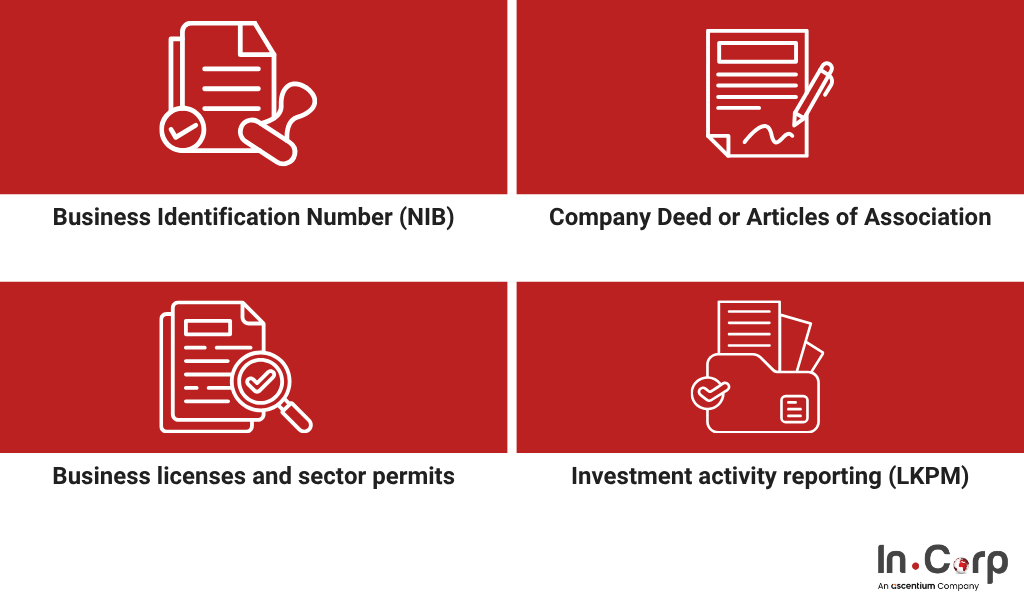
As the transition toward KBLI 2026 implementation progresses, businesses may review several administrative and licensing areas to ensure their records remain aligned with the updated classification.
In practice, companies may review the following:
- Business Identification Number (NIB): The KBLI codes registered in the OSS system should reflect the company’s actual business activities.
- Company Deed or Articles of Association: If the business scope changes or a different classification is adopted, the description of the company’s business activities in the deed or articles of association may need to be adjusted.
- Business licenses and sector permits: Certain licenses are linked to specific KBLI codes, so changes in classification may affect licensing alignment.
- Investment activity reporting (LKPM): Companies may also ensure that their reported activities remain consistent with the registered business classification.
Reviewing these areas helps businesses understand whether any adjustments may be required as the KBLI 2026 transition period continues.
How to prepare for the KBLI 2026
Preparing early can help businesses better understand whether their current classification remains suitable as government systems gradually adopt the KBLI 2025 framework.
In practice, businesses may consider the following steps:
- Review current KBLI registrations: Verify that the KBLI codes listed in the NIB accurately reflect the company’s activities.
- Monitor regulatory and system updates: Follow announcements on the implementation of KBLI 2025 and updates to the OSS system.
- Check licensing alignment: Ensure that existing licenses and permits remain consistent with the registered business classification.
- Prepare possible document adjustments: If business activities expand or classifications change, updates to company records may be considered.
Preparing early allows businesses to approach the KBLI 2026 transition with a clearer understanding of their classification and licensing alignment.
Clear Paths to Product Registration in Indonesia
Navigate the KBLI transition the right way with InCorp
The transition to KBLI 2025, often discussed alongside the implementation of KBLI 2026, reflects Indonesia’s effort to keep its business classification system aligned with evolving industries and international standards.
Companies may not need to update their KBLI codes immediately, but reviewing current classifications can help maintain consistency in business activities and licensing.
InCorp Indonesia (an Ascentium Company) can assist businesses in navigating regulatory requirements and ensuring alignment with the OSS system with our product and registration services. These include:
- KBLI classification review and advisory
- Business license and OSS compliance support
- Company establishment and market entry assistance
- Corporate licensing and regulatory advisory
- Ongoing compliance and reporting support
With local regulatory expertise and regional experience, our team helps businesses maintain compliance as they operate and expand in Indonesia.
Get in touch with us.
What you'll get
A prompt response to your inquiry
Knowledge for doing business from local experts
Ongoing support for your business
Disclaimer
The information is provided by PT. Cekindo Business International (“InCorp Indonesia/ we”) for general purpose only and we make no representations or warranties of any kind.
We do not act as an authorized government or non-government provider for official documents and services, which is issued by the Government of the Republic of Indonesia or its appointed officials. We do not promote any official government document or services of the Government of the Republic of Indonesia, including but not limited to, business identifiers, health and welfare assistance programs and benefits, unclaimed tax rebate, electronic travel visa and authorization, passports in this website.

Verified by
Hotdo Nauli
Senior Legal & Delivery Manager at InCorp Indonesia
Hotdo heads the Legal and Delivery team at InCorp Indonesia, managing Product Registration, Legal Advisory, and Business Licensing. With over 8 years of experience, she focuses on compliance and integrity, ensuring all client operations align with Indonesian laws and regulatory standards, including contract reviews and sector-specific licenses. She is also a licensed advocate and a member of the Indonesian Advocates Association (PERADI).