
Launching a padel court business in Bali offers a unique blend of sporty recreation, tourism appeal, and commercial opportunity. As Bali is growing into a key tourism destination in Indonesia, building a padel court would attract massive business opportunities.
The rise of padel in Indonesia
Padel is rapidly gaining global momentum, with the market expected to hit USD 12.5 billion by 2031, a notable 14% growth from 2023. In Indonesia, the sport is catching on fast, especially among youth, fitness communities, and social clubs, indicating a promising future for the padel market.
Driven by a rising middle class and growing interest in wellness, padel is evolving into more than just a sport—it’s a lifestyle, networking tool, and tourist attraction. This broader impact of the sport makes it an exciting business opportunity. Despite this surge, Indonesia still ranks 6th in Southeast Asia in terms of the number of courts, indicating that supply remains far below demand. This creates a prime opportunity for new businesses.
Why padel fits Bali’s tourism profile
Bali has emerged as one of Indonesia’s earliest adopters of padel. Its reputation as a wellness hotspot makes it the perfect place for this sport. Here’s why:
- Tourists are actively seeking fitness-friendly activities like yoga, surfing, and padel.
- Many tourists come from padel-loving countries like Spain, Italy, and Sweden.
- Short-stay travelers want a fun, social, easy-to-learn sport like padel
- Padel is often seen as a luxury sport, well-suited to Bali’s villa and resort ecosystem.
Moreover, padel courts in Bali can become visual marketing tools. Rice fields, jungles, or ocean views often surround the scenic courts. This aesthetic appeal makes it easy to attract visitors and boost brand visibility, especially in vibrant areas like Canggu, Seminyak, and Uluwatu.
Read more: Top 20 best places to go in Bali: Family-friendly destinations
Challenges of establishing padel courts in Bali
While Bali offers exciting potential for padel businesses, it’s essential to be aware of the unique obstacles you may face during setup. These challenges include limited land availability in high-traffic areas such as Canggu and Seminyak, high construction and interior costs, and complex licensing and regulatory barriers.
Limited Land Availability & Strategic Locations
Finding suitable land in high-traffic areas like Canggu or Seminyak is tough due to limited space and high demand. Zoning restrictions can also block commercial sports use, requiring extra permits or rezoning.
High Investment for Construction & Interiors
Building indoor padel courts requires high-quality materials and systems, which drive up initial costs. Prime locations also mean higher land prices and potential import fees for court equipment.
Complex Licensing & Regulatory Barriers
Business owners must secure multiple permits, including land-use approvals and tax registrations. The process can be confusing for foreigners, and delays are common without expert local support.
Read more: Top 10 most profitable businesses in Bali
How to build a padel court in Bali: What licenses you need
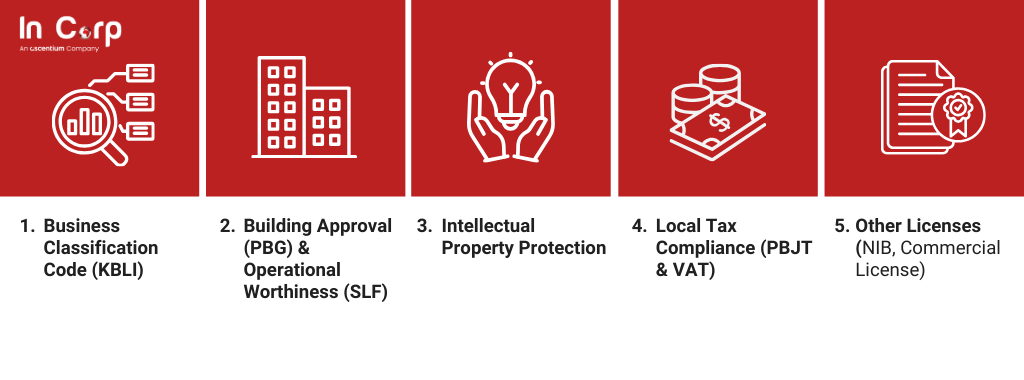
Setting up a padel court in Bali requires strict compliance with Indonesia’s licensing framework. Here are the key documents and registrations you’ll need:
1. Business Classification Code (KBLI)
Register under the correct KBLI code, typically 93120 for sports and recreation activities. This code determines what type of business activities you’re legally allowed to conduct.
2. Building Approval (PBG) & Operational Worthiness (SLF)
To construct or renovate a facility, you need a PBG (Persetujuan Bangunan Gedung). Once completed, secure the SLF (Sertifikat Laik Fungsi) to confirm the building is safe and operational.
3. Intellectual Property Protection
Branding is crucial in the padel industry. Register your brand trademark with the Directorate General of Intellectual Property (DGIP) to protect your business identity.
4. Local Tax Compliance (PBJT & VAT)
Padel services fall under PBJT (Pajak Barang dan Jasa Tertentu) and are subject to VAT (Value Added Tax). Ensure you register your business for tax obligations and report regularly.
5. Other Required Licenses
You’ll also need to obtain NIB (Business Registration Number) and, if applicable, a Commercial License for sport and fitness operations. Local village approvals may also be required, depending on your location.
Working with a local partner like InCorp can simplify the entire setup process for your padel court business. They can help you secure the necessary licenses, manage tax and legal paperwork, and ensure a faster, risk-free setup.
Guide to Doing Business in Bali & Lombok
Start your padel business the right way
Building a padel court in Bali is a wise investment for businesses. With the correct location, proper licensing, and a clear business plan, you can tap into Bali’s growing sports and tourism market.
Need help setting up? InCorp Indonesia (an Ascentium Company) offers clear answers for everything you need:
- Company Registration: We help you establish a legal entity in Indonesia, essential for your padel court operations.
- Business Licensing: From KBLI to other permits, we ensure your padel court meets all legal requirements.
- Tax Consulting: We guide you through PBJT and VAT obligations to ensure your padel business stays compliant and profitable.
Contact us today and let us handle the paperwork, so you can focus on growing your padel business.
Frequently Asked Questions
What are the biggest challenges in building a padel court in Bali?
Limited land in prime areas, high construction costs, and complex licensing requirements are the main obstacles for new padel businesses.
Why is land availability a problem for padel courts in Bali?
High-demand areas like Canggu and Seminyak have limited commercial land, and zoning rules may restrict sports facilities unless special permits are obtained.
Is building a padel court expensive?
It can be expensive due to its material, facility design, and imported equipments.
What licenses are required to open a padel court in Bali?
You need the correct KBLI code (93120), building permits (PBG & SLF), NIB, tax registrations (PBJT & VAT), and possibly local village approvals.
How can InCorp assist with launching a padel business in Bali?
InCorp helps with company registration, licensing, tax compliance, and handling all regulatory paperwork to ensure a smooth business setup.
Get in touch with us.
What you'll get
A prompt response to your inquiry
Knowledge for doing business from local experts
Ongoing support for your business
Disclaimer
The information is provided by PT. Cekindo Business International (“InCorp Indonesia/ we”) for general purpose only and we make no representations or warranties of any kind.
We do not act as an authorized government or non-government provider for official documents and services, which is issued by the Government of the Republic of Indonesia or its appointed officials. We do not promote any official government document or services of the Government of the Republic of Indonesia, including but not limited to, business identifiers, health and welfare assistance programs and benefits, unclaimed tax rebate, electronic travel visa and authorization, passports in this website.

Verified by
Ales Cina
Consulting Manager at InCorp Indonesia
Aleš manages solution delivery at InCorp Indonesia, optimizing incorporation processes and client relationships. His experience in internal auditing, retail, and sales offers valuable global insights. Aleš, with a degree in Economics and Finance from the Czech Republic, helps clients navigate cross-border business challenges, focusing on cultural and legal insights.