Indonesia’s halal certification deadline is now entering the final stage of its phased implementation, with mandatory requirements gradually applying across products such as food, cosmetics, healthcare, and consumer goods.
For many businesses, the key issue is understanding when halal certification becomes mandatory for their specific products and how this affects existing approvals, distribution, and continued market access.
As the transition period concludes across sectors, the halal certification deadline becomes a practical compliance requirement that companies must address to keep their products circulating in Indonesia.
Which products are affected by the 2026 halal certification deadline?
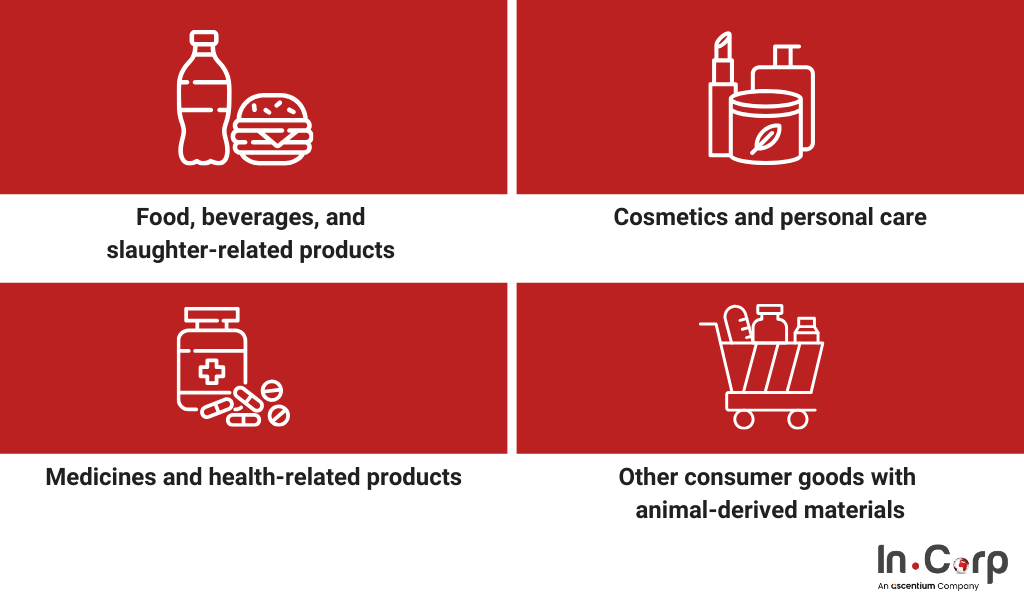
Indonesia applies halal certification obligations by product sector, with phased timelines, as mandated by Law No. 33 of 2014 on Halal Product Assurance and its implementing regulation, Government Regulation No. 42 of 2024. The applicable deadline depends primarily on the product, while business scale and import status determine when the obligation takes effect within that sector.
Food, beverages, and slaughter-related products
This category forms the core of halal regulation due to its direct relevance to consumption.
- Business scale timeline: Mandatory since Oct 2024 (medium/large); Oct 2026 (MSMEs)
- Covered activities: Producers, beverage manufacturers, restaurants, caterers, slaughterhouses
- Material scope: Raw materials, ingredients, and imported food products
Cosmetics and personal care
Halal requirements apply when ingredients or processing may affect the product’s permissibility.
- Timeline: Mandatory by Oct 2026
- Product coverage: Skincare, makeup, toiletries, hygiene products
- Origin: Local and imported cosmetics
- Assessment focus: Ingredients, alcohol content, manufacturing controls
Medicines and health-related products
This sector follows a longer transition due to formulation and safety considerations.
- Implementation phase: Expected after 2026
- Product types: Traditional medicines, supplements, certain health products
- Regulatory factor: Classification and formulation risk level
- Authority alignment: Health regulation integration in progress
Other consumer goods with animal-derived materials
The Halal scope also extends to non-food goods where the material origin is relevant.
- Implementation phase: Expected after 2026
- Material trigger: Leather or animal-origin components
- Application range: Lifestyle, household, wearable goods
- Assessment basis: Material composition and processing contact
How halal certification deadlines are determined
Halal certification timelines in Indonesia are not applied uniformly across all products. Deadlines are set based on the product sector, risk level, and implementation phase, as defined under the national halal assurance framework.
In general, earlier deadlines apply to sectors with direct consumption relevance, while more complex or regulated products follow extended timelines.
Key factors that determine certification timing include:
- Product category: The food and slaughter sectors were prioritised first
- Consumer exposure: Direct-consumption goods face earlier enforcement
- Formulation complexity: Medicines and health products require a longer transition
- Regulatory integration: Alignment with BPOM and health approvals affects timing
- Business scale: MSMEs were granted extended adjustment periods
This phased approach explains why some products already require certification, while others remain within transition windows. Understanding how deadlines are determined helps businesses more accurately assess certification timing across a product portfolio.
Why does halal certification matter for businesses
Halal certification in Indonesia is increasingly tied to how products are classified and regulated across sectors. As product scope and regulatory pathways become more aligned, halal status is becoming part of normal product compliance rather than a separate consideration.
In practice, this affects businesses through:
- Product classification: Clearer identification within the mandatory halal scope
- Sector expansion: Coverage across food, medicines, and cosmetics
- Regulatory alignment: Integration with registration and approvals
- Compliance review: Halal status assessed alongside other requirements
This shift means halal certification now influences how products are registered, distributed, and maintained in the Indonesian market, making it a routine compliance requirement across many consumer sectors.
What happens if products are not halal certified after the 2026 deadline
Once the halal certification deadline applies to a product category, goods without certification are no longer considered compliant for circulation in Indonesia. This affects both locally produced and imported products.
Businesses may face several consequences:
- Sales restriction: Products may be removed from sale or declined by retailers
- Import delays: Imported goods may be delayed or blocked at customs
- Supply disruption: Distribution continuity may be disrupted
- Competitive impact: Certified competitors may gain a market advantage
In practice, certification becomes a basic condition for products to remain in the Indonesian market.
How businesses can prepare for halal certification compliance
Preparing for halal certification is primarily about aligning product information, materials, and processes with the applicable category requirements before submission. Since certification applies at the product level, preparation usually starts by confirming which items in a portfolio fall within the mandatory scope and when the obligation takes effect.
In practice, preparation typically involves:
- Scope identification: Identifying products that require halal certification
- Material review: Reviewing ingredients and material origin, including supplier declarations
- Process verification: Confirming manufacturing or processing controls relevant to halal handling
- Regulatory alignment: Aligning halal status with existing approvals, such as BPOM or import licensing
- Timeline planning: Planning certification timelines based on product category deadlines
For companies managing multiple products or suppliers, this step helps clarify which items are ready for certification and which require adjustments before application.
Clear Paths to Product Registration in Indonesia
Navigate halal certification timelines with InCorp
Indonesia’s halal certification framework now operates as part of routine product compliance across sectors. For many businesses, the practical task is to confirm where each product sits within applicable timelines and to ensure certification aligns with existing approvals to maintain uninterrupted circulation.
InCorp Indonesia (an Ascentium Company) supports halal certification readiness as part of product compliance, including:
- Halal certification approach: Halal certification strategy, including SIHALAL navigation and ingredient or process review
- Regulatory alignment: Alignment of halal registration with BPOM permits (NIE) and health authority requirements
- Process coordination: Coordination of certification steps with the relevant authorities
Fill out the form below to ensure your products remain compliant and continue circulating in Indonesia without disruption.
Get in touch with us.
What you'll get
A prompt response to your inquiry
Knowledge for doing business from local experts
Ongoing support for your business
Disclaimer
The information is provided by PT. Cekindo Business International (“InCorp Indonesia/ we”) for general purpose only and we make no representations or warranties of any kind.
We do not act as an authorized government or non-government provider for official documents and services, which is issued by the Government of the Republic of Indonesia or its appointed officials. We do not promote any official government document or services of the Government of the Republic of Indonesia, including but not limited to, business identifiers, health and welfare assistance programs and benefits, unclaimed tax rebate, electronic travel visa and authorization, passports in this website.

Verified by
Hotdo Nauli
Senior Legal & Delivery Manager at InCorp Indonesia
Hotdo heads the Legal and Delivery team at InCorp Indonesia, managing Product Registration, Legal Advisory, and Business Licensing. With over 8 years of experience, she focuses on compliance and integrity, ensuring all client operations align with Indonesian laws and regulatory standards, including contract reviews and sector-specific licenses. She is also a licensed advocate and a member of the Indonesian Advocates Association (PERADI).