In Indonesia, HS Code does more than describe a product. It influences how goods are assessed for duties, licensing, and regulatory checks. Slight differences in classification, such as product function or materials, can lead to different treatment at customs.
Issues usually do not come from a lack of knowledge, but from relying on a code that no longer fits the product or the way it is assessed locally. When this happens, the impact often appears later, during clearance or review.
An accurate HS Code assessment is essential for compliance and risk control, helping importers feel confident in their classification decisions.
Understanding HS Code in Indonesia
An HS Code follows the global Harmonized System, using a six-digit structure that countries expand through their own tariff classifications. Indonesia applies this system through its national framework, which reflects local tariff rates and regulatory requirements.
Direktorat Jenderal Bea dan Cukai oversees HS Code classification in Indonesia. The primary reference is the Buku Tarif Kepabeanan Indonesia (BTKI), which is aligned with the ASEAN Harmonised Tariff Nomenclature.
In practice, this means an HS Code used in Indonesia may not match:
- The code provided by the supplier
- The classification used in the country of origin
- The code applied in other export markets
These differences are common and usually relate to how Indonesian customs assesses:
- Product function
- Material composition
- Intended use
Another point often overlooked is that HS Code references change over time. Updates to tariff books or interpretation can affect products that have been imported for years without issue. When this happens, the risk lies in continuing to use the code that no longer reflects the current assessment.
Read more: Mastering import regulations in Indonesia: Restructuring for success
Why the HS Code assessment is critical
In Indonesia, HS Code classification has legal consequences. Once declared, it becomes the reference for duties, taxes, licensing, and customs review. If the code used is weak or outdated, the impact often becomes apparent later, during clearance or an audit.
HS Code assessment is governed by Indonesia’s customs framework, including Law No. 10 of 1995, as amended by Law No. 17 of 2006, and supported by tariff regulations issued through the Buku Tarif Kepabeanan Indonesia (BTKI).
The main areas of exposure are outlined below.
Import duty and tax determination
HS Code determines customs duty, import VAT, and import income tax. Different codes can result in materially different landed costs.
Issues commonly arise when:
- More than one HS Code could apply
- A lower-duty code is used without strong support
- Old classifications are reused without review
When reassessed, customs may apply duties retroactively.
Import licensing and regulatory triggers
Many import controls in Indonesia are linked directly to the HS Code. Classification may determine whether:
- Import licenses are required
- Goods fall under prohibited or restricted categories
- Technical regulations apply
Licensing issues are often discovered late when the HS Code assessment is not done early.
Customs clearance and audit risk
HS Code is a frequent focus in customs checks by Direktorat Jenderal Bea dan Cukai. Common outcomes of misclassification include:
- Clearance delays
- Post-clearance audit findings
- Backdated duty and tax assessments
In practice, inconsistency across documents often raises more concern than classification complexity.
How HS Code assessment is conducted in practice
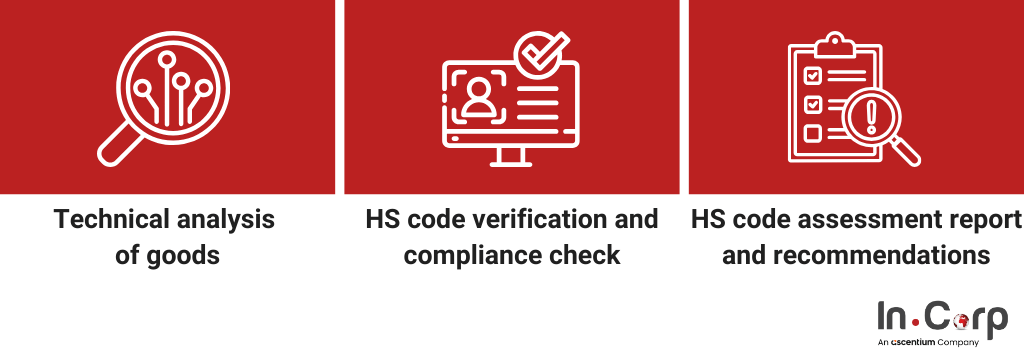
In practice, HS Code assessment is usually structured around a transparent review process. The purpose is to confirm that a product’s classification can reasonably support customs review, not just that a code has been assigned.
Technical analysis of goods
The process typically starts with a technical review of the product. This step focuses on understanding the product from a customs perspective, including:
- Product specifications
- Materials used
- Intended use
This analysis serves as the foundation for interpreting the product under the tariff system.
Verification and compliance check
Once the product characteristics are clear, the code being used is verified against the latest tariff classifications. This review refers to the Buku Tarif Kepabeanan Indonesia (BTKI) and other relevant tariff systems.
At this stage, the assessment may also consider whether the product qualifies for preferential tariffs under applicable Free Trade Agreements.
Assessment report and recommendations
The assessment outcome is typically documented in a short report. This summary explains:
- The assessment result
- The classification logic applied
- Any customs or import considerations
This documentation becomes important if the HS Code is reviewed later during clearance or audit. A clear assessment record often supports the classification more effectively than the code alone.
Clear Paths to Product Registration in Indonesia

Get the HS Code right from the start with InCorp
Early HS Code assessment helps importers feel proactive and in control, reducing the risk of surprises like duty adjustments or licensing gaps later.
By partnering with InCorp (an Ascentium Company) for your assessment, you can:
- Review product specifications, materials, and intended use.
- Verify the code against current Indonesian tariff classifications.
- Identify any licensing or regulatory implications.
- Document the classification logic for future reference.
Correctly determining the HS Code doesn’t eliminate all risks, but it does enhance clarity and predictability. Fill out the form below for a smoother import experience in Indonesia.
Frequently Asked Questions
Why is HS Code important in Indonesia?
HS Code determines how goods are treated at customs, including import duties, taxes, licensing requirements, and regulatory checks.
Can the same product have different HS Codes in different countries?
Yes. HS Codes used in Indonesia may differ from those used by suppliers or in other countries due to local tariff rules and customs interpretation.
What causes HS Code problems for importers?
Issues often arise from using outdated or weak classifications, relying on supplier-provided codes, or not reviewing HS Codes when products or regulations change.
What risks come from incorrect HS Code classification?
Misclassification can lead to clearance delays, additional duties and taxes, licensing issues, and findings during customs audits.
How is an HS Code assessment usually conducted?
It involves reviewing product specifications, materials, and intended use, verifying the code against current tariff rules, and documenting the classification logic.
Get in touch with us.
What you'll get
A prompt response to your inquiry
Knowledge for doing business from local experts
Ongoing support for your business
Disclaimer
The information is provided by PT. Cekindo Business International (“InCorp Indonesia/ we”) for general purpose only and we make no representations or warranties of any kind.
We do not act as an authorized government or non-government provider for official documents and services, which is issued by the Government of the Republic of Indonesia or its appointed officials. We do not promote any official government document or services of the Government of the Republic of Indonesia, including but not limited to, business identifiers, health and welfare assistance programs and benefits, unclaimed tax rebate, electronic travel visa and authorization, passports in this website.

Verified by
Hotdo Nauli
Senior Legal & Delivery Manager at InCorp Indonesia
Hotdo heads the Legal and Delivery team at InCorp Indonesia, managing Product Registration, Legal Advisory, and Business Licensing. With over 8 years of experience, she focuses on compliance and integrity, ensuring all client operations align with Indonesian laws and regulatory standards, including contract reviews and sector-specific licenses. She is also a licensed advocate and a member of the Indonesian Advocates Association (PERADI).