If you’re importing goods into Indonesia, it’s essential to understand how Lartas (Larangan dan/atau Pembatasan) may apply to your product. Recognizing these regulations can help importers feel more confident in navigating customs and reduce uncertainty about restrictions.
This guide outlines the key elements you need to review: how Lartas is regulated, which products are affected, how to check your product’s status, and the documents or steps required to stay compliant.
Legal framework and recent updates
Lartas is governed by Indonesia’s trade regulations, which determine how restricted and prohibited goods are managed at the border. Recent policy shifts introduce a more structured, commodity-based system that assigns different requirements to specific product groups.
Permendag 16/2025 and commodity-based regulations
Permendag 16/2025 introduces a cluster-based approach that applies tailored requirements to groups such as electronics, textiles, chemicals, agriculture, and other regulated commodities. The aim is to streamline monitoring, improve permit processing, and make INSW (Indonesia National Single Window) checks more predictable for compliant importers.
Permendag 47/2025 and the technical ministry requirements
Effective 1 January 2026, Permendag 47/2025 updates the list of prohibited imports by reclassifying goods with high health, safety, or environmental risks. These items cannot be imported under any circumstances.
Beyond the prohibition list, certain products still require technical approval from several ministries. These requirements ensure that regulated goods meet Indonesia’s safety and quality standards before they are cleared for customs.
Categories of Lartas goods in Indonesia
Lartas items fall into two primary groups: goods that cannot be imported at all and goods that may enter Indonesia only with technical permits.
Fully prohibited imports
Some products are classified as prohibited due to safety, environmental, or regulatory risks. These items cannot be imported, even with special approval.
- Second-hand clothing
- Hazardous waste (B3 materials)
- Certain high-risk chemicals
- Used vehicles in restricted categories
These prohibitions are typically non-negotiable, and shipments falling under this group are subject to immediate rejection.
Restricted goods requiring technical approval
Other products may be imported, but must comply with requirements set by sector-specific agencies. Each item must meet the relevant standards or certifications to clear customs.
- Cosmetics and skincare products
- Food and beverages
- Medical devices
- Electronics and telecommunications equipment
- Toys
- Batteries and chemical products
- Animal and plant products
These obligations ensure that products entering Indonesia meet national safety, quality, and environmental standards.
How to check Lartas status
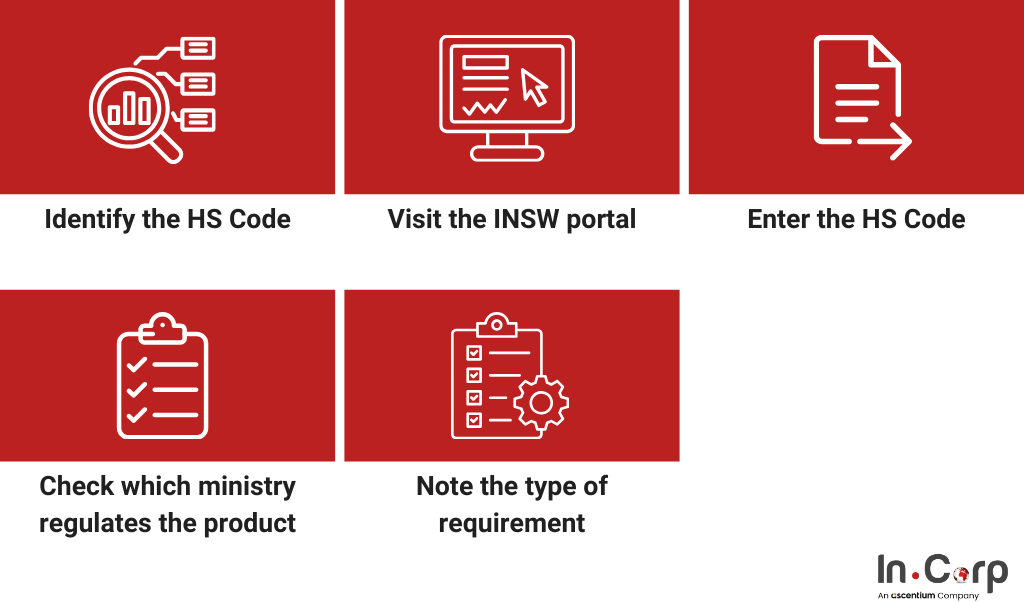
A quick review through the INSW platform helps importers identify whether a shipment requires permits before arrival, making the process feel more manageable and less stressful.
- Identify the HS Code: Accurate classification is essential, as different codes can trigger different regulatory obligations.
- Visit the INSW portal: INSW provides the official, most up-to-date reference for Lartas requirements.
- Enter the HS Code: The system will display whether the item is prohibited, restricted, or exempt from Lartas rules, along with the agencies involved.
- Check which ministry regulates the product: Depending on the item, the required permit may come from BPOM, Kominfo, Kemenkes, the Ministry of Trade, the Ministry of Agriculture, or other authorities.
- Note the type of requirement: INSW will indicate whether the product is:
- Prohibited
- Restricted
- A border requirement
- A post-border requirement
This information helps importers determine what needs to be completed before the shipment moves.
Required documents for importing Lartas goods
The appropriate permits must be in place for Lartas-regulated products before they clear customs. Common requirements include:
- Import Approval (PI): For regulated goods such as steel, textiles, and industrial products.
- Product Registration Number (NIE): Required for cosmetics, food, supplements, and medicines.
- SNI certificate: Applies to toys, electronics, electrical cables, and home appliances.
- Import Clearance Certificate (SKI): Needed for medical devices, lab tools, and hospital equipment.
- Postel & EMC certification: Mandatory for smartphones, routers, and other wireless or network-connected devices.
These permits ensure each category meets Indonesia’s technical and safety standards before entering the market.
Steps to take if a product is classified as Lartas
If your product falls under Lartas, the import process can still proceed as long as the required steps are completed in advance.
- Verify the HS Code in INSW: Confirm the correct classification to avoid preparing the wrong permits.
- Identify the required permit: Determine whether the product needs PI, NIE, SKI, SNI, or another technical approval.
- Prepare the documentation: Gather all permits and supporting reports before the goods are shipped.
- Submit accurate information: Ensure all details match during declaration to prevent the goods from being held.
- Seek professional assistance: For more complex cases, working with experienced compliance support helps reduce the risk of errors.
Clear Paths to Product Registration in Indonesia
Ensure smooth import clearance with InCorp
Managing Lartas requirements is essential for smooth importing. For businesses handling multiple product types or items regulated by several ministries, an experienced compliance partner can help simplify the process and minimize costly mistakes.
InCorp Indonesia (an Ascentium Company) supports businesses with end-to-end import compliance services, including:
- HS Code validation and regulatory checks
- Permit and license processing
- BPOM and Kominfo advisory and submission
- Customs documentation review and INSW preparation
- Compliance assessments for new products
- Ongoing regulatory monitoring to keep your imports aligned with updated rules
Ensure products enter the Indonesian market smoothly by completing the form below.
Frequently Asked Questions
Is Import Approval required for all imported goods?
No. Import Approval (PI) is only required for specific regulated or restricted goods listed under certain HS Codes. Common categories include electronics, health products, machinery, and raw materials.
Can a foreign company apply for Import Approval without a local entity?
No. Only companies registered in Indonesia with a valid NIB/API can apply for PI. However, foreign businesses can import legally using an Importer of Record (IOR) service.
How long does it take to obtain Import Approval?
It typically takes 5–15 business days after submission, depending on the commodity type, document completeness, and ministry response time.
Does Import Approval cover multiple shipments or just one?
It depends on the type of PI issued. Some are shipment-specific, while others can be valid for multiple shipments within the approval’s validity period.
Can Import Approval be amended or transferred?
No. PI is non-transferable and cannot be amended after issuance. If there are changes in quantity, HS Code, or supplier, a new application is required.
Get in touch with us.
What you'll get
A prompt response to your inquiry
Knowledge for doing business from local experts
Ongoing support for your business
Disclaimer
The information is provided by PT. Cekindo Business International (“InCorp Indonesia/ we”) for general purpose only and we make no representations or warranties of any kind.
We do not act as an authorized government or non-government provider for official documents and services, which is issued by the Government of the Republic of Indonesia or its appointed officials. We do not promote any official government document or services of the Government of the Republic of Indonesia, including but not limited to, business identifiers, health and welfare assistance programs and benefits, unclaimed tax rebate, electronic travel visa and authorization, passports in this website.

Verified by
Hotdo Nauli
Senior Legal & Delivery Manager at InCorp Indonesia
Hotdo heads the Legal and Delivery team at InCorp Indonesia, managing Product Registration, Legal Advisory, and Business Licensing. With over 8 years of experience, she focuses on compliance and integrity, ensuring all client operations align with Indonesian laws and regulatory standards, including contract reviews and sector-specific licenses. She is also a licensed advocate and a member of the Indonesian Advocates Association (PERADI).