Foreign companies often expect product registration in Indonesia to follow familiar procedures. Instead, they encounter layered requirements, multiple reviewing agencies, and strict rules on who is permitted to apply.
These challenges stem less from technical complexity and more from Indonesia’s legal framework. This guide outlines the key issues foreign companies face and the practical steps that help prevent delays.
Understanding BPOM Indonesia and its regulatory role
BPOM (Badan Pengawas Obat dan Makanan) is Indonesia’s primary authority for product safety and quality. Its responsibilities include evaluating technical documentation, assessing risks, and verifying that products meet national standards before entering the market.
For foreign companies, understanding BPOM’s role explains why a local applicant is required and why consistency across all submitted documents is essential.
Types of product registration in Indonesia
Different product groups follow different pathways. While all begin through the national licensing system, each category has its own technical expectations. Common regulated groups include:
- Food and beverages
- Cosmetics
- Supplements
- Traditional products and herbal items
- Household products
- Medical devices
The category determines the depth of review and the type of documents required.
Can foreign businesses register products without a local entity?
Foreign companies cannot directly submit or hold approvals for product registration in Indonesia. The law requires a local company to act as the certificate holder, ensuring that someone within Indonesia is accountable for compliance and post-market obligations. This clarity helps foreign audiences feel confident about the process and their responsibilities.
This requirement is rooted in several regulations:
- OSS-RBA framework (Government Regulation No. 5/2021): Product-related licenses must be tied to an Indonesian entity with a valid NIB.
- BPOM regulations for food, cosmetics, supplements, and similar categories: Only companies with the appropriate distribution or importer permits may submit applications.
- Ministry of Health regulations for medical devices: Registrations must be filed by a locally licensed distributor or appointed local representative.
These rules make it clear that even when a foreign manufacturer meets all technical standards, a local entity must apply.
What documents are needed for product registration in Indonesia?
For product registration in Indonesia, BPOM rules require a consistent set of documentation to prove product safety, legality, and conformity with risk-based standards. BPOM Regulation No. 27 of 2025 governs the review of products under the OSS RBA system.
The basic documentation generally includes:
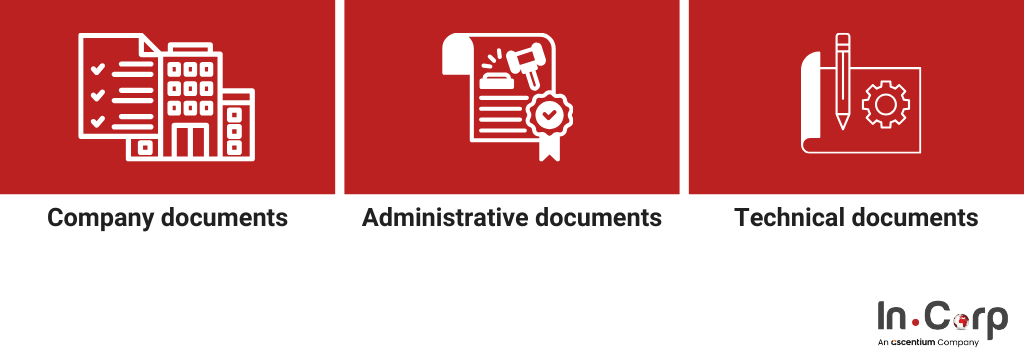
- Company documents: Business identity and licenses tied to the Indonesian entity submitting the application
- Administrative documents: Authorization letter from the manufacturer and certificates proving legal production, such as Free Sales Certificate and GMP/ISO evidence
- Technical documents: Manufacturer-issued dossier containing formulation, specifications, and label design
These core groups form the foundation of BPOM submissions. Aligning them with the updated BPOM requirements reduces the need for resubmission or correction during review.
How long does it take to get BPOM or MoH registration?
Timelines vary depending on the category and the completeness of the document. Foreign applicants often experience longer processing times due to additional checks. In general, registrations fall into a few standard ranges:
- Food, beverages, cosmetics, and supplements: Often several weeks to a few months, depending on whether additional clarification or testing is required.
- Medical devices: Timelines may extend further, especially for higher-risk classes that require more technical evaluation.
- Products requiring laboratory testing: Processing will proceed only once all test results meet the required specifications.
Most delays stem from mismatched or incomplete information, so submitting a thorough, accurate dossier ensures a smoother process and faster approval.
How to register products through BPOM
Registering your products with BPOM is an essential step to ensure compliance with Indonesian regulations. This process involves several key steps that must be carefully executed to ensure successful registration.
- Classify the product based on Indonesian categories.
- Prepare the required documents, ensuring alignment across all sections.
- Submit through the OSS system, which routes the application to BPOM.
- Wait for review, which may involve questions or requests for additional evidence.
- Receive approval, followed by certificate issuance and post-market responsibilities.
The steps are straightforward, but attention to detail is essential.
How to prevent rejection or delays in the product registration process
Most issues in product registration in Indonesia arise from gaps in documentation or inconsistencies that regulators notice during review. Even minor discrepancies can lead to requests for clarification, which slows the process. Understanding the common causes of delays helps companies prevent them early.
Typical issues include:
- Incomplete or mismatched dossier details
- Supporting documents that do not align with the product’s formulation or labeling
- Authorization letters that lack the required information
- Outdated certificates or missing technical evidence
These points may seem minor, but they often trigger additional reviews.
Legal factors that affect foreign product registrations in Indonesia
Since the local entity holds the registration certificate, foreign companies should consider how this affects long-term control. Changing distributors may require new approvals, and the certificate holder must file any formulation or labeling adjustments. Renewal cycles also vary, and some products require re-evaluation before approval is extended.
Clear agreements and regular communication with the local representative help maintain consistent oversight of the product’s lifecycle.
Clear Paths to Product Registration in Indonesia
Simplify Indonesia’s product registration requirements with InCorp
The process becomes more manageable with accurate preparation, aligned documents, and clear expectations. Many foreign companies choose support when they want greater stability over certificate ownership, document consistency, and ongoing obligations.
InCorp Indonesia (an Ascentium Company) can assist you in areas such as:
- License holder and compliance: Support with appointing a certificate holder, keeping ownership stable, and navigating changing regulations.
- Document preparation: Help align technical, administrative, and company documents for a consistent and ready submission.
- Review and ongoing duties: Assistance with regulator communication, renewals, variations, and other post-market obligations.
Fill out the form below to start the next steps in your product registration journey.
Get in touch with us.
What you'll get
A prompt response to your inquiry
Knowledge for doing business from local experts
Ongoing support for your business
Disclaimer
The information is provided by PT. Cekindo Business International (“InCorp Indonesia/ we”) for general purpose only and we make no representations or warranties of any kind.
We do not act as an authorized government or non-government provider for official documents and services, which is issued by the Government of the Republic of Indonesia or its appointed officials. We do not promote any official government document or services of the Government of the Republic of Indonesia, including but not limited to, business identifiers, health and welfare assistance programs and benefits, unclaimed tax rebate, electronic travel visa and authorization, passports in this website.

Verified by
Hotdo Nauli
Senior Legal & Delivery Manager at InCorp Indonesia
Hotdo heads the Legal and Delivery team at InCorp Indonesia, managing Product Registration, Legal Advisory, and Business Licensing. With over 8 years of experience, she focuses on compliance and integrity, ensuring all client operations align with Indonesian laws and regulatory standards, including contract reviews and sector-specific licenses. She is also a licensed advocate and a member of the Indonesian Advocates Association (PERADI).